
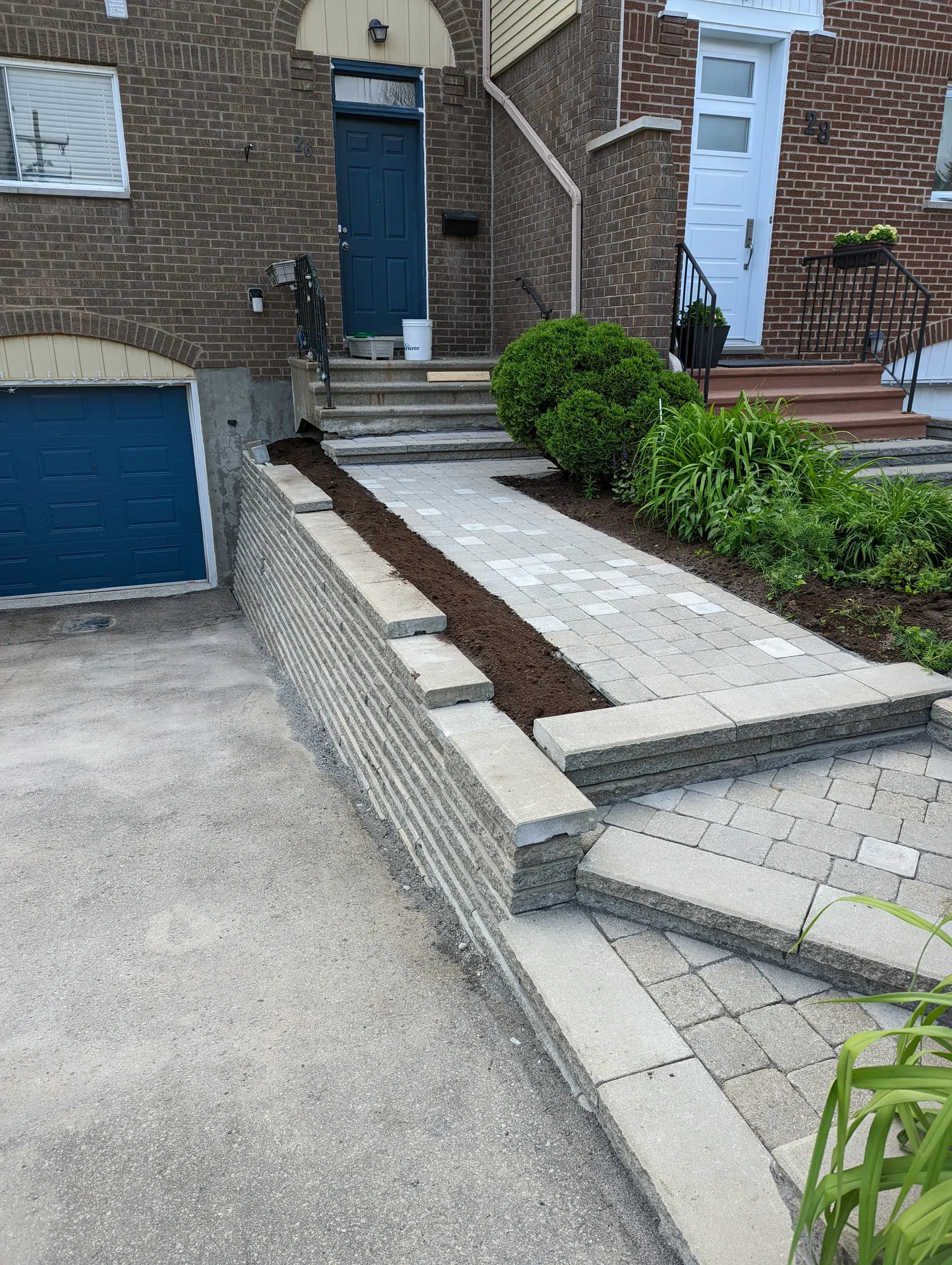
Retaining Wall Repair in West Island Montreal
A failing retaining wall is not just a cosmetic issue, it is a structural one. At Construction OEM, we repair retaining walls by correcting the cause of failure, rebuilding the support behind the wall, and restoring proper drainage to help prevent the same problem from returning.
When a retaining wall starts to fail, the problem is usually behind the wall, not on the face of it. Leaning sections, shifting blocks, bulging areas, and partial collapse are often caused by poor drainage, weak base preparation, inadequate reinforcement, or pressure building up in the soil behind the structure.
Water is often the main contributor. If water cannot drain properly, pressure builds over time and pushes the wall forward. In West Island Montreal, freeze-thaw cycles and seasonal moisture changes can make the problem worse and speed up structural movement.
At Construction OEM, we do not just repair what is visible. We address what is happening behind the wall. That can include excavation, rebuilding the base, replacing backfill, correcting drainage, and reinforcing the structure so it can better handle both soil weight and water pressure over time.
What you get
Leaning or tilting walls
Bulging or shifting sections
Cracked or displaced blocks
Walls collapsing or separating
Water buildup behind the wall
Drainage failures and soil pressure issues
Base instability and structural movement
Repeating white staining caused by moisture movement
How we approach it
1. Inspection and Diagnosis
We assess the condition of the wall, identify movement, and determine the root cause of the issue. This includes reviewing drainage conditions, water flow, soil pressure, and the condition of the wall system itself.
2. Controlled Disassembly
Damaged or unstable sections are carefully dismantled to relieve pressure and allow access to the structural components behind the wall.
3. Excavation Behind the Wall
We excavate behind the affected areas to expose the backfill, reduce pressure, and access the source of the problem. This step is essential for correcting drainage and rebuilding the wall properly.
4. Base Correction and Backfill Reconstruction
The base is rebuilt and compacted where needed. Proper backfill materials are installed so the wall is supported while still allowing water to drain instead of becoming trapped behind it.
5. Drainage Correction
We correct or install drainage systems so water can move away from the wall instead of collecting behind it. This helps relieve pressure and reduce recurring issues, including structural movement and mineral staining.
6. Reinforcement When Required
When the wall system requires it, reinforcement such as geogrid is installed to improve stability and help tie the wall into the soil behind it.
7. Reinstallation of Blocks
Original blocks are reinstalled where possible or replaced where needed. The wall is rebuilt with attention to alignment, level, support, and structural consistency.
8. Final Stabilization and Inspection
The wall is stabilized, cleaned, and inspected to confirm that the repair is structurally sound, visually clean, and built for better long-term performance.
Why this service matters
Poor drainage behind the wall
Water pressure building up in the backfill
Weak or improperly compacted base preparation
Missing or inadequate reinforcement
Improper backfill materials
Wall systems that were not built with the support they needed
Freeze-thaw movement that worsens existing weak points
When This Is The Right Choice
The wall is partially failing but not fully collapsed
The base can be corrected without full replacement
Drainage issues can be resolved
Most of the materials are still usable
White staining continues to return because moisture is still moving through the wall
The structural issue is localized enough to repair without rebuilding the entire system
Why Choose Construction OEM
Focus on structural correction, not cosmetic patching
Proper base rebuilding and reinforcement
Drainage solutions designed to relieve pressure behind the wall
Clean, precise reconstruction
Experience repairing failed retaining walls
Repair methods adapted to the wall system in place when possible
Strong fit for West Island Montreal drainage and soil conditions
Related services
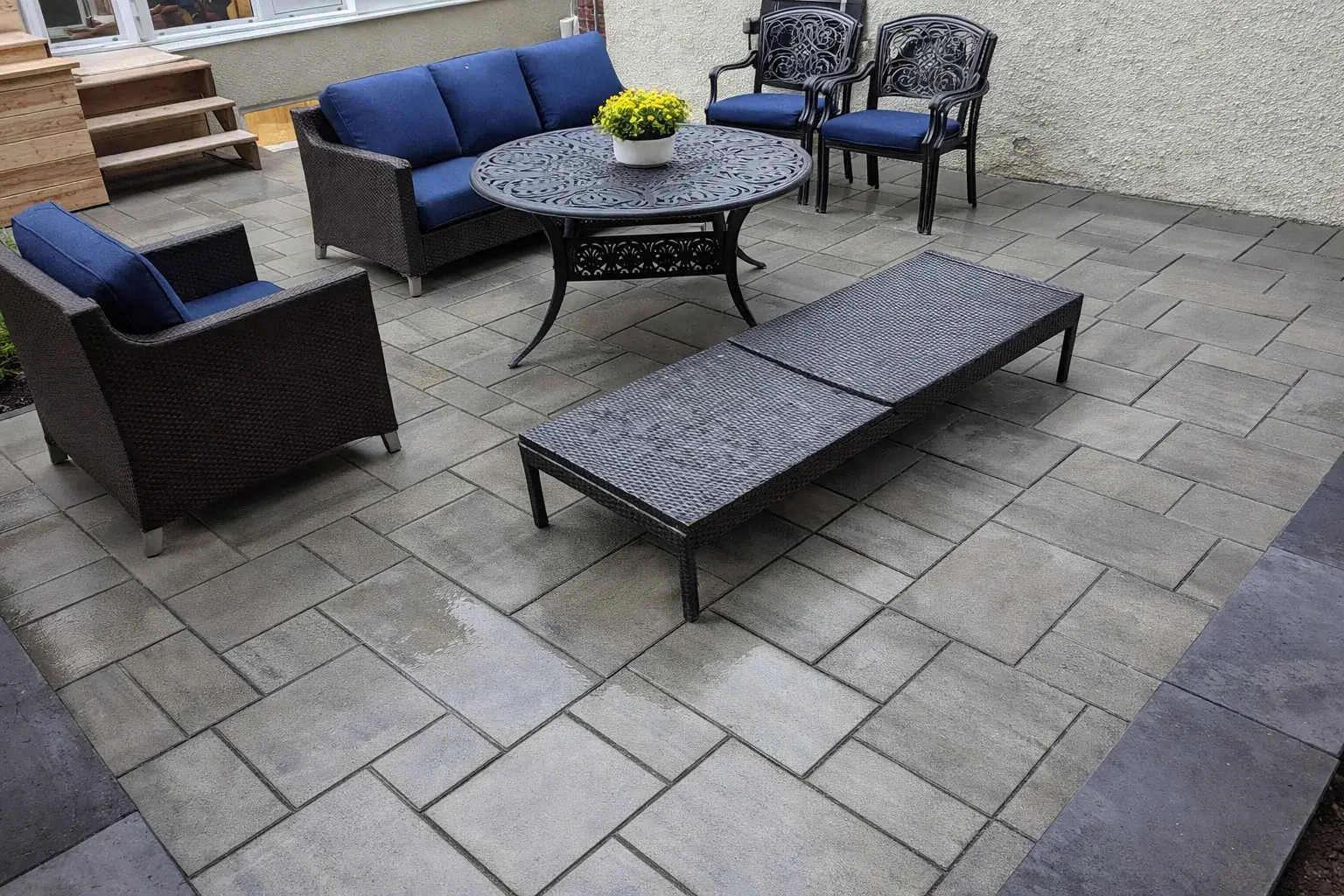
Patio Installation
Durable, elegant patios designed for everyday use and long-term performance.
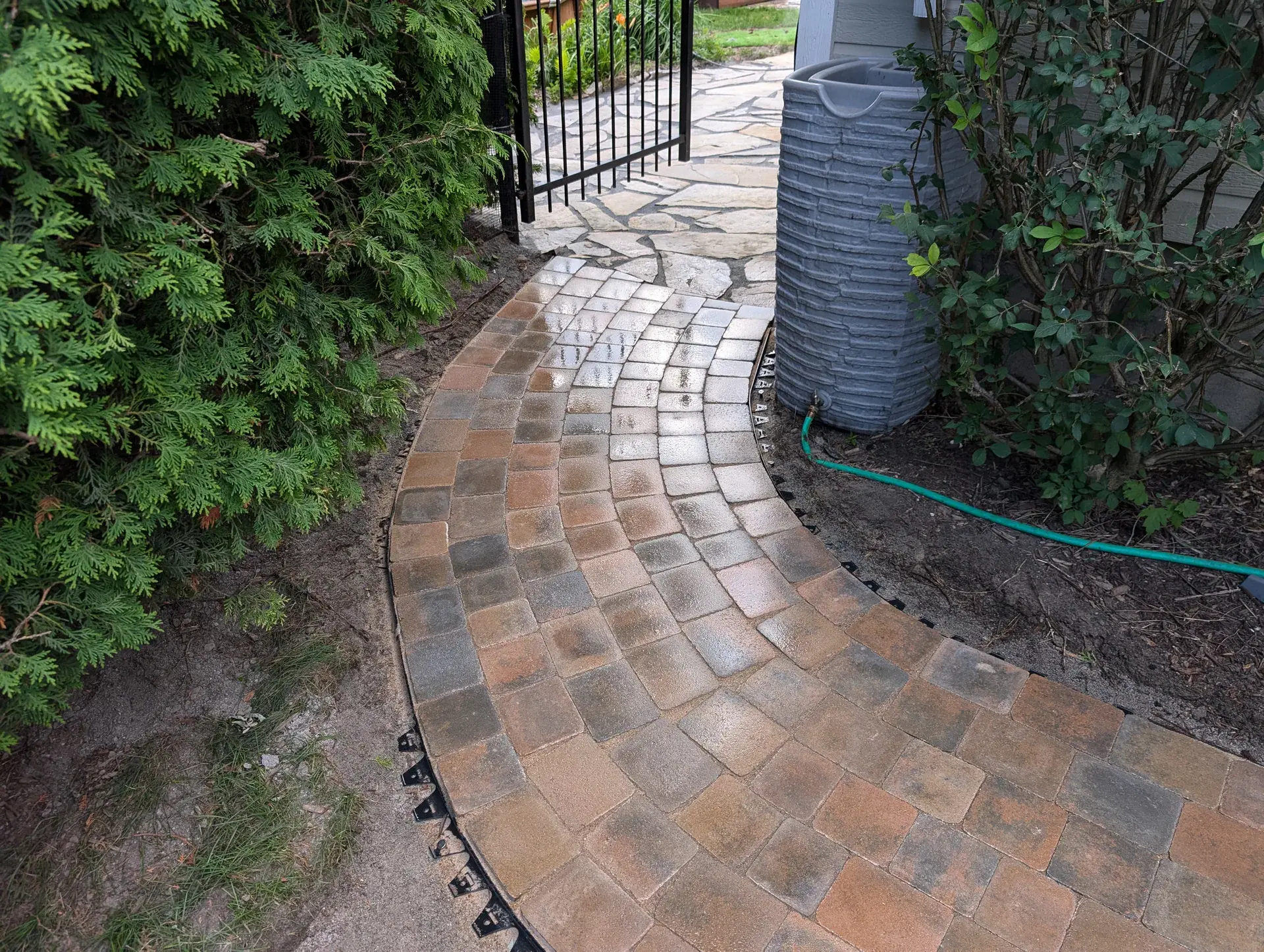
Walkways & Pathways
Built for daily use, safe movement, and clean visual flow across your property.
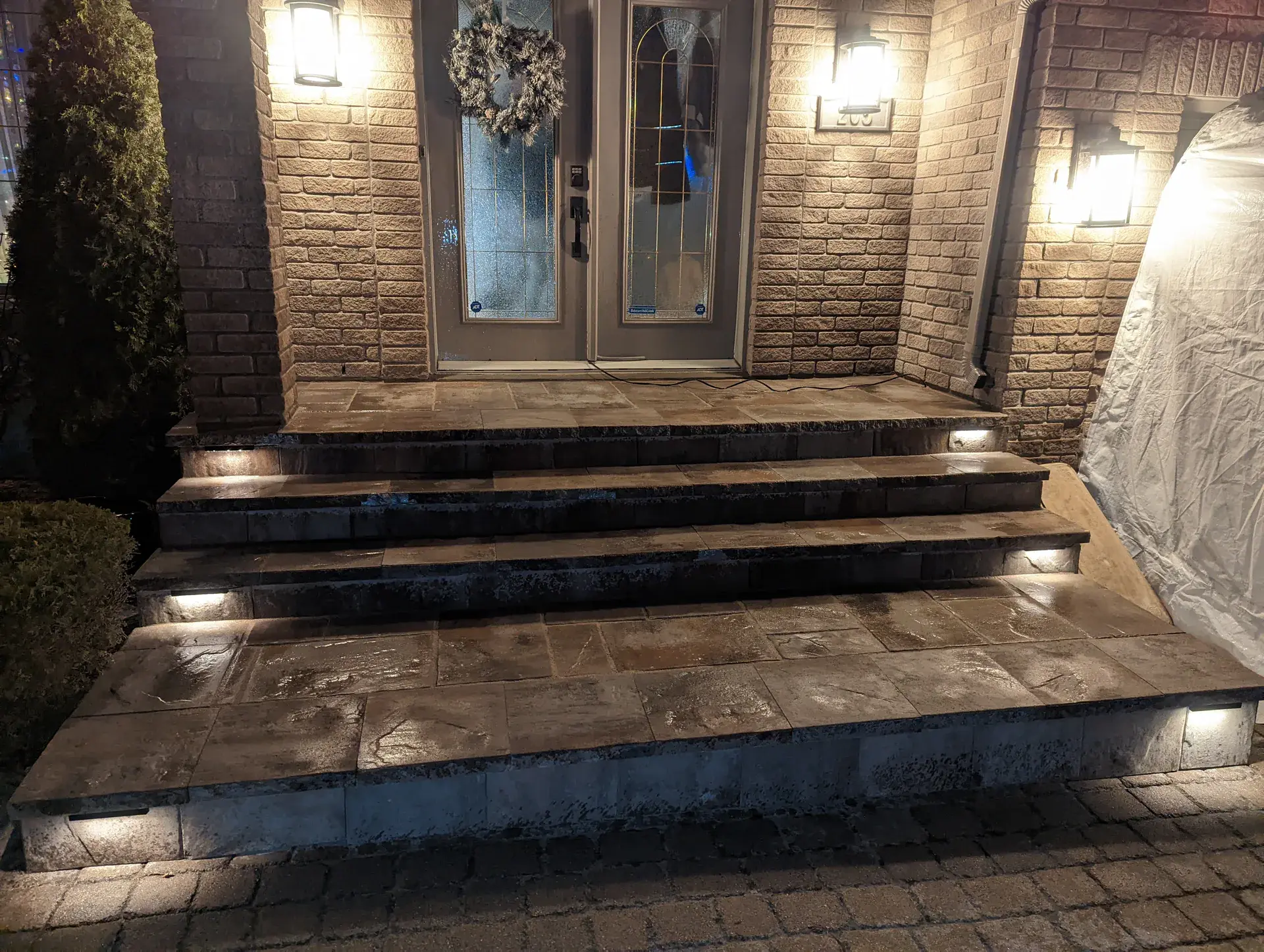
Steps & Entryways
Built for safety, function, and a clean first impression.
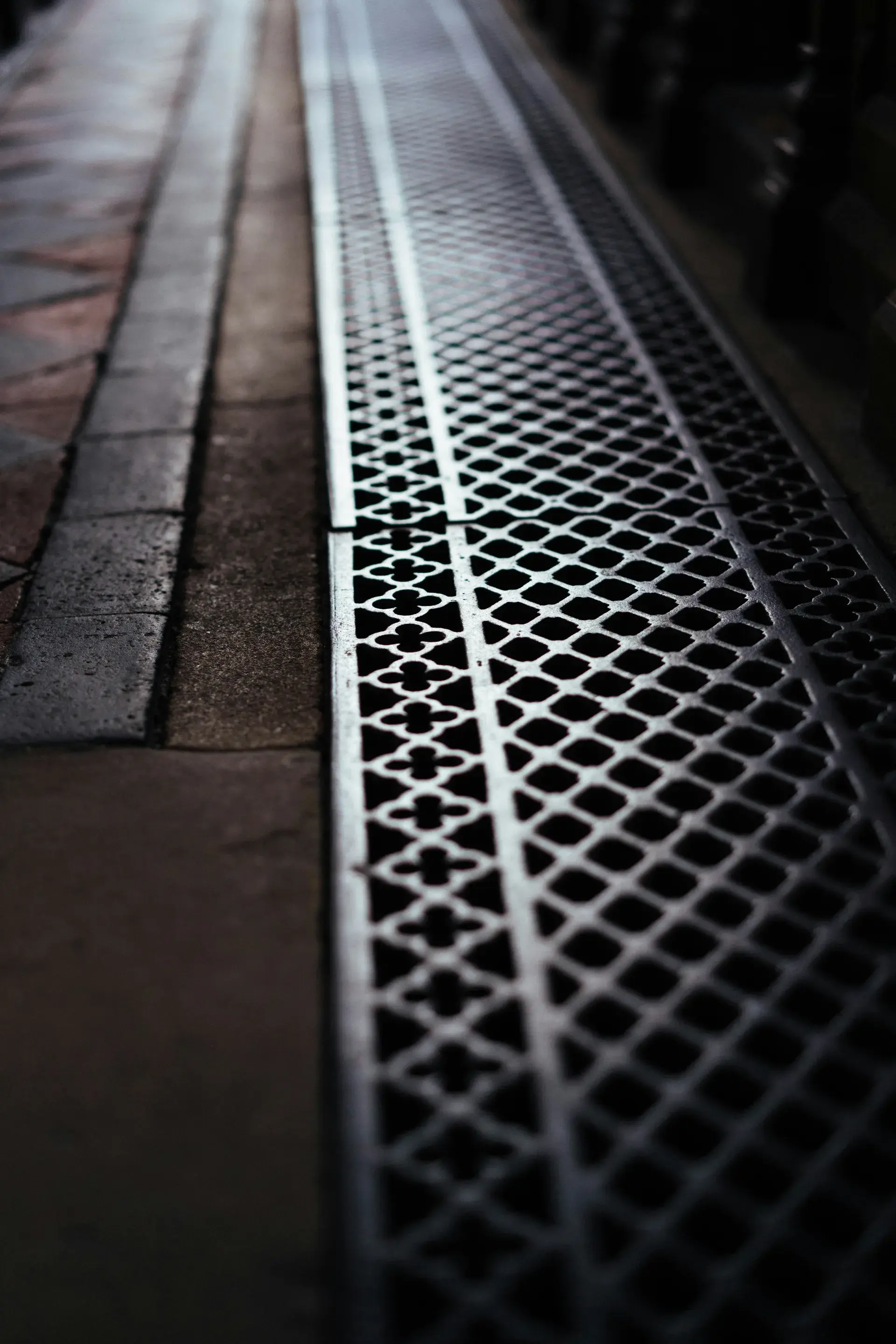
Drainage Solutions
Control water at the source, not just after the damage starts.
Serving the West Island and surrounding areas
In West Island Montreal, repeated moisture changes, drainage pressure, and freeze-thaw cycles can quickly turn a weak retaining wall into a larger structural problem. That is why proper repair must address what is happening behind the wall, not just what is visible on the surface.
Everything you need to know
Frequently asked questions
Why do retaining walls fail?
Most retaining walls fail because pressure builds behind them. This is usually caused by poor drainage, a weak base, missing reinforcement, or improper backfill. Over time, that pressure can cause leaning, bulging, shifting, or collapse.
Why is drainage important behind a retaining wall?
Drainage is one of the most important parts of wall performance. Without it, water builds up behind the wall, increasing pressure and weakening the structure over time. Proper drainage allows water to move out instead of becoming trapped.
What is geogrid and why is it used?
Geogrid is a reinforcement material installed in the soil behind the wall. It helps tie the wall into the soil, distribute pressure more effectively, and improve stability, especially on taller walls or walls under heavier load.
Can a retaining wall be repaired instead of replaced?
In some cases, yes. If the problem is localized and the wall system can be corrected properly, repair may be the right option. If the wall is broadly failing because of poor drainage, weak construction, or widespread structural problems, replacement may be necessary.
What causes the white stains on retaining wall blocks?
White staining is usually caused by water moving minerals such as calcium and lime through the wall. When drainage is poor, moisture continues passing through the wall and leaves visible deposits on the surface.
Can those white stains be removed permanently?
Not always. Cleaning can improve the appearance, but if the moisture problem continues, the stains often return. The more lasting solution is to correct the water movement behind the wall.
Why does the base matter so much in a retaining wall?
The base supports the entire structure. A properly prepared and compacted base helps the wall stay level, aligned, and stable over time. If the base is weak or poorly built, the wall is far more likely to move or fail.
Are all retaining walls built the same way?
No. Many retaining walls fail because they were installed without proper drainage, reinforcement, or base preparation. A correctly built wall requires the right base, backfill, drainage, and structural support for the wall system being used.
Need a quote?
Not sure if your retaining wall needs repair or replacement? Contact Construction OEM for an evaluation and a repair solution built around drainage correction, structural support, and long-term wall stability.